
SC modifies gang rape sentence
Case BriefsSupreme Court

Upholding the appellant’s conviction for gang rape, the Court modified the sentence from imprisonment for the remainder of natural life to 20 years’ rigorous imprisonment with the benefit of remission after considering his young age, absence of criminal antecedents, satisfactory conduct in prison and the possibility of reformation.
Cipla's Remdesivir Blacklisting
Case BriefsHigh Courts

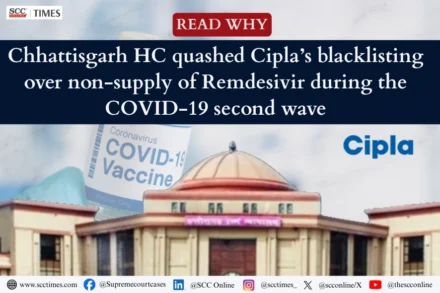
In the present case, the Chhattisgarh High Court examined legality of blacklisting a pharmaceutical company that was unable to fulfil sharply escalated Remdesivir during the second wave of COVID-19, where demand was escalated manifold beyond the indicative tender quantity within a matter of days.

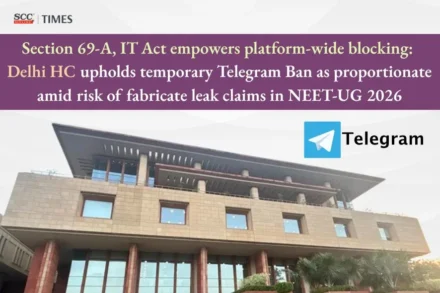
Telegram Ban NEET 2026
Case BriefsHigh Courts

With 2.2 million candidates appearing in the re-examination and unlawful channels reappearing within minutes of every takedown, the Court held that narrower measures had been exhausted and that Telegram’s own CEO’s public admission of “backdating scams” and “hundreds of removed channels” constituted a concession that rendered the platform-wide block legally sustainable.

doctrine of proportionality public land allotment
Case BriefsSupreme Court

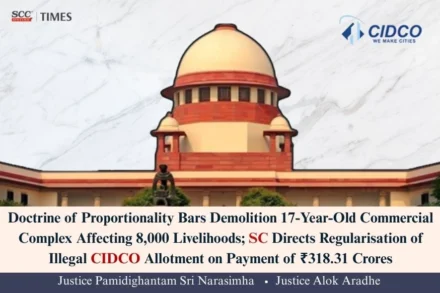
By judgment day, the mall had been running for seventeen years, supporting 8,000 livelihoods and generating ₹100 crores in annual tax revenue. The Supreme Court held that demolition would not vindicate the public interest, it would destroy it.

Deposit of passport bail condition
Case BriefsHigh Courts

“The passport functions as an indispensable document of nationality and identity, the condition for its deposit must be predicated upon a considered assessment of objective parameters indicating a clear and imminent threat of flight risk or obstruction of justice, thereby ensuring that such condition adheres strictly to the doctrine of proportionality.”

bombay high court
Case BriefsHigh Courts

In the words of Diplock LJ in Council of Civil Service Unions v Minister for the Civil Service, [1984] 3 WLR 1174, the Wednesbury principle, formulated by Lord Greene, is whether the decision is so outrageous in its defiance of law or logic that it cannot possibly be sustained.