2026 SCC Vol. 6 Part 1: Key Supreme Court Cases on Constitution, Income Tax, Negotiable Instruments, & more
Explore the latest Supreme Court Cases in 2026 SCC Vol. 6 Part 1 on reservations, double taxation, negotiable instruments, and more.

Bringing you the Best Analytical Legal News


Explore the latest Supreme Court Cases in 2026 SCC Vol. 6 Part 1 on reservations, double taxation, negotiable instruments, and more.
Explore the latest Supreme Court cases in 2026 SCC Vol. 1 Part 5 covering Article 19 free speech, stray dogs regulation, Customs electronic evidence, Power Purchase Agreements and cheque dishonour litigation.
“For deciding jurisdiction, it is not sufficient to establish whether a person maintains an account in a particular bank. It is necessary to also ascertain the specific branch of the bank in which he maintains the account to completely and unambiguously decide the said question”.
This article aims to explain the legal framework governing cheque dishonour under Section 138 of the NI Act, with particular focus on the significance, format, and essentials of a cheque bounce notice. It also highlights key judicial developments shaping the interpretation of these provisions.
Allahabad High Court said that the petitioner had 15 days’ period to make the payment from the date of receipt of notice, on 08-01-2020, and the said period expired on 23-01-2020. Therefore, the cause of action for filing the complaint arose on 23-01-2020, as per clause (c) of the proviso of Section 138.
Allahabad High Court noted that the Supreme Court has issued several directions to deal with the pendency of dishonor of cheque cases and for their expeditious disposal
The Delhi High Court observed that the wanton arraignment of directors without reference to their role in relation to a transaction, or to the issuance or dishonour of a cheque by the company, requires to be deprecated and discouraged, since it amounts to abuse of the salutary process of criminal law.
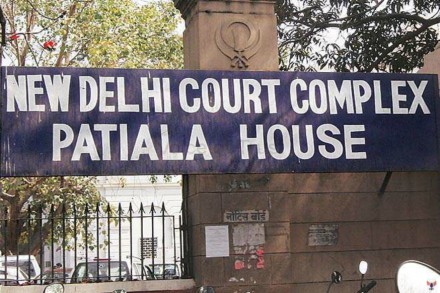
Supreme Court said that as four of the six cases have been filed by the respondent company before the Dwarka Courts at New Delhi and only two such cases are pending before the Courts at Nagpur, it would be convenient and in the interest of all concerned, that the cases be transferred to the Dwarka Courts at New Delhi.
Supreme Court: In a case where an offender under Section 138 of the Negotiable Instruments Act, 1881 (NI Act) was denied the
Supreme Court: Explaining the law on vicarious liability under the Negotiable Instruments Act, 1881, the bench of Ajay Rastogi and Sanjiv Khanna*,
Karnataka High Court: HP Sandesh J. dismissed the petition and upheld the judgment by the Appellate Court and further directed the complainant
Orissa High Court: R K Pattnaik, J. dismissed the petition and held that the ground on which the petition is raised is
Supreme Court: In a case relating to dishonour of cheques where it was alleged that the complaint was filed by the managing
“A cheque issued as security pursuant to a financial transaction cannot be considered as a worthless piece of paper under every circumstance.”
Supreme Court: Explaining the law relating to vicarious liability of the Directors of a company under Sections 138 and 141 of the
The settlement agreement subsumes the original complaint.
Sucheta Sarkar, Editorial Assistant has put this story together
Supreme Court: In the case where the question as to how proceedings for an offence under Section 138 of the Negotiable Instruments